



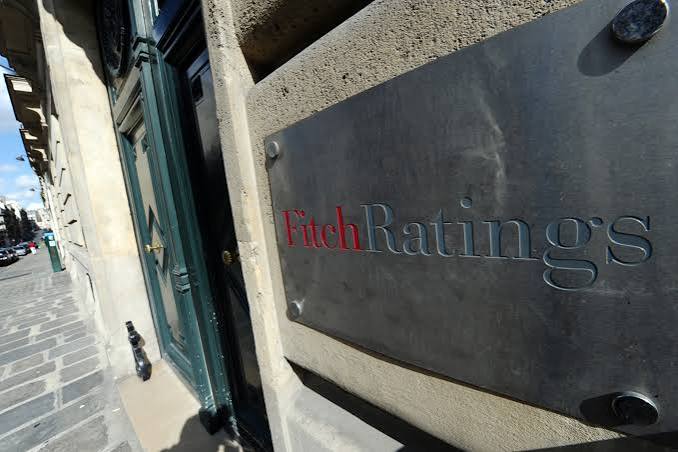
Fitch warns rising French debt could lead to credit rating downgrade
Rating agency says weak growth, higher borrowing costs and political fragmentation complicate efforts to stabilize public finances.
Fitch Ratings warned Monday that insufficient progress in reducing France’s budget deficit could lead to a negative rating outlook, while a further substantial increase in government debt could trigger a downgrade.
The agency, which rates France A+ with a stable outlook, said the proposed 2027 budget highlights mounting difficulties in stabilizing public debt amid weak economic growth, higher interest costs and persistent political fragmentation.
The government now expects a deficit of 5.4% of gross domestic product (GDP) in 2026, exceeding its previous 5% target and Fitch’s August forecast of 5.2%.
The deterioration reflects weaker tax revenues linked to softer economic activity and labor market conditions, alongside higher interest payments, Fitch said.
The proposed 2027 budget targets a deficit of 5% of GDP, with €43 billion ($48 billion) in new savings, equivalent to 1.4% of GDP.
Measures include freezing public-sector wages, limiting inflation adjustments for pensions above €1,260 a month and extending a special tax on large companies while narrowing its scope.
Without additional policy measures, the government estimates next year’s deficit would reach 6.4% of GDP.
Fitch said France’s borrowing costs have risen sharply since its August review, with the 10-year government bond yield approaching 5% in October, compared with an average of 3.4% in 2025.
The yield gap with German government bonds widened to about 140 basis points, indicating increased vulnerability to shocks in investor confidence.
Fitch now estimates that stabilizing France’s debt ratio would require cumulative fiscal adjustment equivalent to around 3.5% of GDP, up from the 3% estimated in August.
The agency nevertheless expects passage of the budget to be smoother than in recent years, citing political incentives to avoid prolonged uncertainty ahead of the April 2027 presidential election.
However, approval alone would not resolve the scale of the adjustment needed, Fitch said, warning that public tolerance for sustained fiscal restraint may be limited.
