



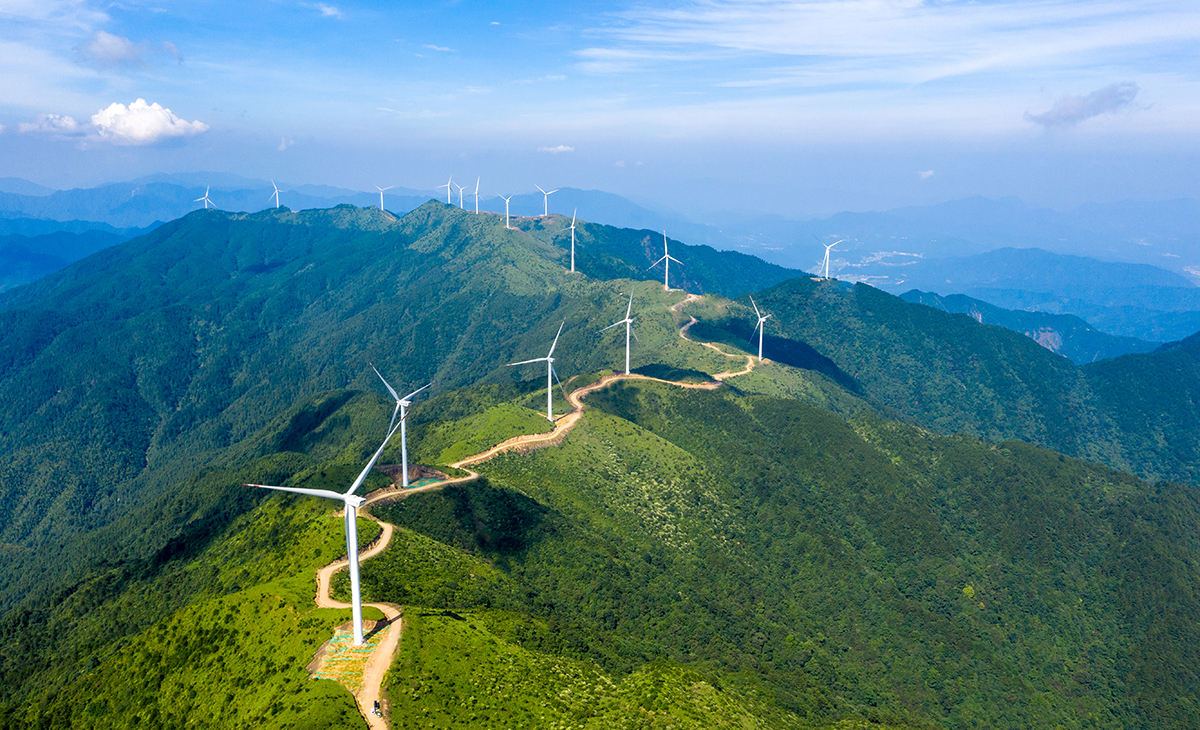
Europe wind power installations jump 30 percent to 8.8 GW as Germany drives record-year push
Europe invested EUR9 billion in new wind projects during the first half.
Europe is heading toward what could become a record year for wind power deployment after new installations jumped 30 percent in the first half of 2026, driven by a sharp expansion in Germany and stronger activity across several other markets.
Europe installed 8.8 gigawatts of new wind capacity during the first six months of the year, compared with about 6.8 GW in the same period of 2025, according to WindEurope. The new turbines are capable of generating enough electricity to supply around 7 million European households while replacing fossil fuel imports equivalent to approximately 25 liquefied natural gas tankers annually.
WindEurope now expects total new installations across Europe to reach 24 GW in 2026, helped by stronger construction activity during the summer months. The industry association expects the market to move toward annual installation rates of around 30 GW during the 2030s.
Germany accounted for 3.4 GW of the capacity installed during the first half, representing close to 40 percent of Europe’s total additions. More than 500 turbines were commissioned in the country, including 423 onshore and 84 offshore units. Belgium added another 60 MW.
WindEurope’s wider data show that the United Kingdom ranked second for new capacity during the first half with 789 MW, followed by Spain with 612 MW. Installation activity was also significantly higher in Denmark, Poland, Portugal and France, while Ukraine added more than 400 MW despite the continuing war.
Onshore wind remained the dominant technology. Of the 8.8 GW installed across Europe, 6.5 GW, or 74 percent, was onshore, while 2.3 GW of new offshore capacity was connected to the grid. The EU accounted for 7.1 GW of the overall first-half additions.
Europe now has more than 311 GW of installed wind capacity, including 270.5 GW onshore and 40.9 GW offshore. The EU accounts for nearly 252 GW of that total, comprising 228.4 GW onshore and 23.2 GW offshore.
Investment activity is also creating a pipeline of projects scheduled to enter operation over the coming years.
Europe raised EUR9 billion for new wind projects during the first half of 2026, financing 5.2 GW of future capacity. Around 4.5 GW of that pipeline is onshore and 0.6 GW offshore, according to WindEurope’s Autumn 2026 report.
Governments also awarded support to 17.2 GW of wind capacity during the first six months, split almost evenly between 8.8 GW of onshore projects and 8.4 GW offshore. WindEurope expects governments to tender support for more than 24 GW during the second half, with its September assessment putting the prospective additional auction volume at around 26 GW.
If those tenders proceed as planned, Europe would award more new wind capacity through government auctions in 2026 than in any previous year.
Firm turbine orders nevertheless softened. European developers ordered 10.6 GW of turbines during the first half, including 7.8 GW for onshore projects and 2.8 GW offshore. That was 12 percent below the 12 GW ordered during the same period of 2025.
WindEurope warned that the sharp acceleration in construction does not mean the industry’s structural challenges have been resolved.
Permitting remains the most immediate concern. Germany approved more than 9 GW of new onshore wind capacity during the first half of 2026, putting the country on course for another record permitting year following reforms that accelerated project approvals.
Other major markets are moving in the opposite direction. WindEurope said permitting volumes declined in Spain, France, the United Kingdom, Italy and Ireland, creating uncertainty over whether today’s stronger installation levels can be sustained once projects already in the development pipeline are completed.
WindEurope CEO Tinne Van der Straeten said 2026 could become a record year for wind power but warned that the momentum cannot be taken for granted.
She said government decisions on permitting, auctions, electricity grids and electrification over the coming months would determine whether Europe can sustain the current build-out while using wind power to strengthen economic resilience.
Electricity-grid capacity is another major constraint on future expansion.
WindEurope said in June that more than 500 GW of prospective wind capacity was waiting for grid-connection approval across Europe. The association has called for faster permitting, more coordinated European grid planning and measures to remove projects that are occupying connection queues without realistic prospects of being built.
The European Commission has also identified grid development and permitting as major obstacles to renewable-energy deployment. Its proposed Grids Package seeks to streamline approvals for transmission and distribution infrastructure, storage and renewable projects while strengthening cross-border planning.
Grid projects in parts of Europe can take as long as 10 years to complete, with permitting accounting for more than half of that period in some cases, according to the Commission. Renewable-energy permitting itself can take as long as nine years in certain jurisdictions.
That gap between generation projects and the infrastructure needed to connect them has become increasingly important as more wind and solar capacity enters Europe’s electricity system.
WindEurope expects Europe to install another 148 GW of wind capacity between 2026 and 2030, including the 8.8 GW already completed during the first half of this year.
The EU is expected to account for about 111 GW of that expansion, averaging roughly 22 GW of new capacity annually. Under the association’s current forecast, total European wind capacity would reach around 436 GW by 2030, including 342 GW in the EU.
WindEurope estimates that wind would meet around 27 percent of EU electricity demand by the end of the decade under that trajectory.
That would represent significant growth from the current market, but it remains below earlier ambitions associated with Europe’s broader renewable-energy targets.
The EU’s revised Renewable Energy Directive establishes a binding target for renewable sources to account for at least 42.5 percent of energy consumption by 2030, with an ambition to reach 45 percent.
The European Commission previously estimated that meeting its 2030 objectives would require European wind capacity to rise to more than 500 GW.
The acceleration in 2026 follows a year of stronger investment and capacity additions.
Europe installed 19.1 GW of new wind power in 2025, taking total capacity at the time to 304 GW. Of the new installations, 17.2 GW were onshore and 2 GW offshore. Germany was the largest contributor, adding 5.7 GW, followed by Türkiye with 2.1 GW and Sweden with 1.8 GW.
Investment reached EUR45 billion during 2025, financing 20.9 GW of projects expected to be installed over subsequent years.
The offshore market was notably weaker, with just 2 GW connected during 2025, the lowest annual amount since 2016. WindEurope said construction delays contributed to the decline and expected part of that delayed capacity to move into 2026, helping explain the stronger first-half performance this year.
The latest 2.3 GW of offshore installations during the first half of 2026 already exceeded the amount connected during all of 2025.
Europe’s wind expansion also forms part of a broader effort to reduce dependence on imported fossil fuels and expand domestically produced electricity.
Under national Recovery and Resilience Plans, EU measures were expected by 2026 to support about 60 GW of additional renewable-energy capacity, including more than 15 GW of offshore wind, while contributing to the modernization of roughly 14,000 kilometers of electricity transmission and distribution lines.
The European Wind Power Action Plan has also focused policy attention on faster permitting, improved auction design, access to financing, the wind manufacturing supply chain and workforce development.
WindEurope argues that increasing wind generation could strengthen industrial competitiveness as well as energy security by reducing exposure to imported fuels and providing businesses with greater access to domestically generated electricity.
The association says electricity still represents less than one-quarter of Europe’s total energy consumption, creating a parallel challenge for wind developers because new generation projects ultimately require greater demand from industry, transport and heating.
The industry is therefore urging governments to accompany faster wind construction with reforms across the wider electricity system.
WindEurope is calling for full implementation of EU permitting rules, faster completion of the EU Grids Package, greater use of emissions-trading revenues to support industrial electrification and a binding renewable-energy target for 2040.
It is also advocating greater use of two-sided contracts for difference in wind auctions, arguing that predictable revenue frameworks can lower financing costs and make projects easier to fund.
Germany’s recent experience has become a central example in that debate. WindEurope said the country permitted 21 GW of new onshore wind during 2025, while a recent German onshore auction was heavily oversubscribed and produced an average awarded price of EUR51 per megawatt-hour.
